

Aleksey Maro
I am a postdoctoral researcher at the University of Notre Dame, funded through the Society of Science, working with the Archie Lab and the Amboseli Baboon Research Project.
I am interested in how microbes within food influence the gut microbiome, and in particular, the role of microbial fermentation within fruit. Humanity’s ancestral diet of fermenting fruit likely predisposed us to intentional alcohol production in more recent epochs. My investigation into the natural ecology of this ancient fruit-primate relationship in wild chimpanzees revealed that they on average consume ~1–2 standard drinks per day by human standards. I am working with Dr. Elizabeth Archie’s Lab and the Amboseli Baboon Research Project (ABRP) in Kenya to investigate how variation in the diet, and the microbial composition of what is ingested, is connected to the functions performed by the gut microbiome in wild savanna baboons (Papio cynocephalus and P. anubis). To what extent are the molecular tools for digesting and metabolizing fruit (such as CAZymes) already present within free-living microbes inside the fruit pulp (or other plant tissues)? Does the presence or absence of certain microbes attract or deter herbivory? Do evolutionary pressures that drive diet also drive evolution of the gut microbiome? To this end, I am leveraging the massive ABRP fecal microbiome metagenomic dataset from hundreds of baboons over many years to directly compare what the baboons were eating to the bacterial, eukaryotic and viral DNA residing in their gut. In Kenya, I will study the baboon diet in the field directly by live culturing and nanopore sequencing microbes residing within various plant tissues. Understanding how baboons survive and thrive on the harsh savanna can reveal details about human origins and insights into the evolution of our own microbiome.
I recently completed my Ph.D. Dissertation with Robert Dudley and the Dudley Lab in the Department of Integrative Biology, University of California, Berkeley. The title of my thesis was: Towards a wild fermentation ecology: alcohol within floral nectar and the frugivorous diet of chimpanzees, all of which has been published (see Publications).

A path diagram describing the reciprocal mutualistic services of fruits, their seed dispersers, and yeasts. The Drunken Monkey hypothesis contributes the yeast portion of the triangle, arguing that attraction to ethanol can be adaptive for frugivores by, for example, acting as a long-distance olfactory signal of sugar calories. The yeast repays the fruit for its calories indirectly, by attracting seed dispersers. Yeasts are also thought to ecologically compete with spoilage microbes.
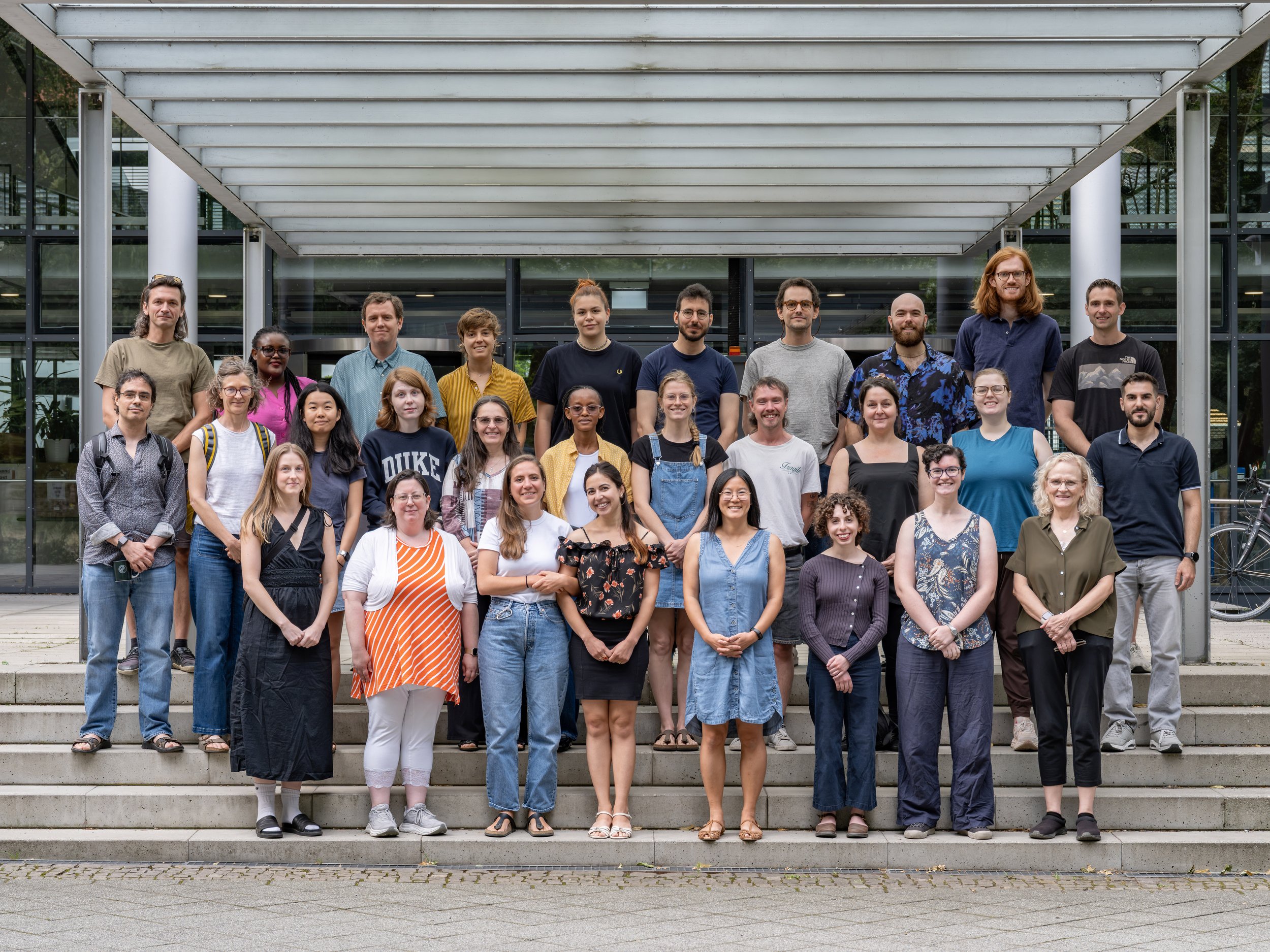
At the Amboseli Baboon Research Project Joint Lab Meeting in Leipzig, Germany in 2026 (I am top left)